How to compare Manuka honey brands: a practical buyer's guide
How to compare Manuka honey brands: a practical buyer's guide
Search for the best Manuka honey and you will find a hundred articles that all end with someone's own product. That is not much use to you.
The honest answer is that "best" depends on which grade you want, how much you will use and what you are willing to pay per 100 g — and that all of those are answerable. What follows is the method, in the order that eliminates the most choices fastest.
Step 1: Put every jar on the same scale
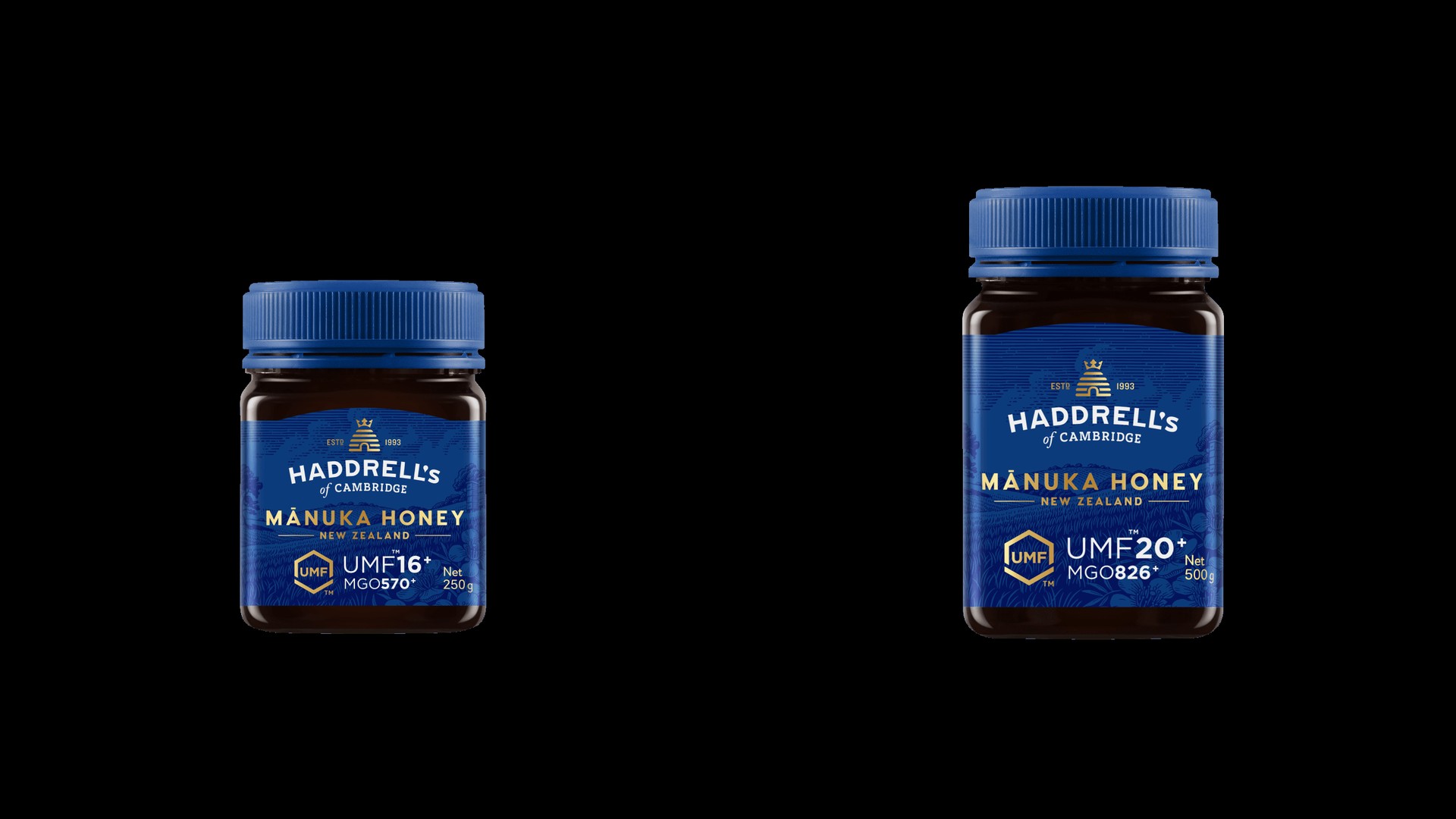
You cannot compare a UMF 20+ with an MGO 829+ until you know they are the same honey. They are.
Before anything else, convert every candidate into one currency. Use UMF as the reference and run everything else through the MGO to UMF conversion table. NPA and IAA numbers already line up with UMF directly. Anything expressed as "Total Activity", "K-Factor" or "Active" does not convert at all, and that in itself is information.
Nine times out of ten, this single step reveals that two jars with wildly different prices are selling the same grade.
Step 2: Compare price per 100 g, not price per jar
This is where most money is lost. Work out cost per 100 g and write it down.
A worked example. Say one brand sells a 250 g jar of a grade for €80, and another sells 500 g of the same grade for €150. The first is €32 per 100 g, the second €30 — the bigger jar wins, but by less than the headline sizes suggest. Now compare that with a 250 g jar of a higher grade at €100: €40 per 100 g. That is not a worse deal; it is a different product. Only compare per-100-g prices within the same grade.
Step 3: Check what "certified" actually covers
Certification is not one thing. Look for a UMF licence number you can look up, a lot or batch code, and the words monofloral or multifloral Manuka, product of New Zealand. We wrote a full guide to what certification actually certifies, including a five-step check you can run in a shop.
A brand that publishes its licence number and can produce a certificate of analysis for your lot is playing a different game from one that prints "Active" on the front.
Step 4: Read the origin line carefully
Product of New Zealand is the strong claim. Packed in New Zealand is nearly as strong. "Packed in" somewhere else can be perfectly legitimate, but it means the honey travelled in bulk, and bulk honey is where blending and heat damage happen.
Step 5: Monofloral or multifloral?
This is a real price driver and it is rarely explained. Monofloral means the harvest was predominantly Manuka nectar. Multifloral means it is genuine, tested Manuka honey with more of other flowers in the mix. Multifloral is not fake and it is not bad — it is a different, usually cheaper product with a milder character. If two jars are far apart on price at a similar grade, this is one of the first things to check.
Step 6: Match the format to your habit, not your ambition
A 1 kg jar of a mid grade often costs less per 100 g than a 250 g jar of the same grade — but only if you finish it. A small jar of a grade you have never tasted is a cheaper experiment than a large jar of one you might not like.
Single-serve sachets sit outside this comparison entirely: you are paying for portability and hygiene, not for honey per gram. Lozenges are a different product again and are not graded the same way.
Step 7: Expect the same grade to taste different between brands
Two certified UMF 16+ honeys can taste noticeably different. Grade measures one compound; flavour comes from the whole harvest — the season, the region, how the honey was extracted and how gently it was handled. This is why people become loyal to a producer rather than to a number, and it is a legitimate reason to pay a little more for a brand you have tasted and liked.
The comparison worksheet
Fill this in for two or three candidates and the decision usually makes itself.
| Check | Jar A | Jar B |
|---|---|---|
| Grade, converted to UMF | ||
| Size | ||
| Price per 100 g | ||
| Monofloral or multifloral | ||
| Grading system named on the label | ||
| UMF licence number present | ||
| Origin line | ||
| Lot code present |
If a column has blanks that the seller cannot fill, that is your answer.
Where you buy matters too
Manuka is one of the most counterfeited foods in the world, which makes the seller part of the product. On an open marketplace you are trusting whoever holds the stock. A specialist retailer that names the producer, publishes the grade and the MGO equivalent, and can answer a question about a batch is carrying risk you would otherwise carry yourself.
Also worth asking: how is it stored and shipped? Manuka does not need refrigeration, but it does not enjoy a hot warehouse either — heat is exactly what drives HMF up and degrades the honey.
So what is "the best Manuka honey"?
The best Manuka honey is the highest grade you will genuinely finish, from a producer you can verify, at the lowest price per 100 g for that grade, in the format that matches how you will actually use it.
That is a slightly boring answer. It is also the only one that survives contact with an actual shelf.
The takeaway
Convert to one scale. Divide by weight. Verify the licence number. Read the origin line. Check monofloral versus multifloral. Then buy the smallest size of your chosen grade first, and scale up once you know you like it.
Seven checks, about five minutes, and you will never overpay for a number again.